G bros claim they predicted market crash from a meme
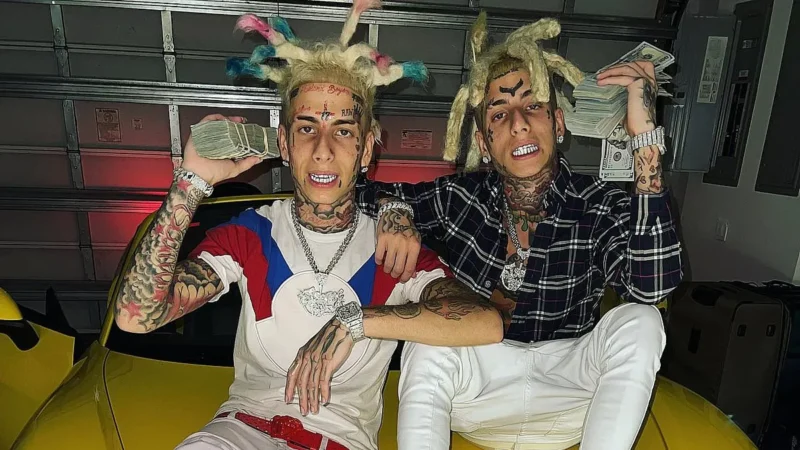
The online trading world is full of unexpected twists, but nothing grabs attention quite like the G bros claiming they predicted a massive market crash based solely on a meme. Their bold announcement spread quickly across social platforms, leaving traders amused, confused, and surprisingly intrigued. The idea that a meme could warn of economic chaos might sound ridiculous, yet the G bros insist their viral moment held hidden signals that everyone else missed.
Their story has become a conversation starter among the digital trading community, especially for Gen Z traders who love blending humor with market talk. Whether the claim is serious or satire, it highlights how modern trader culture evolves through jokes, screenshots, and spontaneous ideas rather than traditional financial logic. As discussions grow, many are questioning whether memes can ever hold predictive value or if this moment simply reflects the playful side of online markets.
How the Meme Became a Market Warning
According to the G bros, the entire prediction began when they saw a simple meme circulating in their trading group chat. The image featured a cartoon character staring nervously at a chart that dipped sharply before bouncing up again. To most people, it looked like a standard joke about volatility, but the G bros interpreted the pattern as a signal of an upcoming correction. They claimed the expression on the cartoon’s face matched the uncertainty they sensed in the market.
The meme gained traction overnight, and soon thousands of traders were reposting it with their own interpretations. Some viewed it as nothing more than funny content, while others started asking whether the chart shape resembled real market patterns. What surprised many was how quickly the conversation shifted from humor to speculation. Traders began comparing the meme to technical charts, searching for similarities that could justify the G bros’ bold prediction.
Even though the meme was clearly meant for entertainment, its timing coincided with real world financial concerns. Global headlines hinted at slowing growth, and social media was buzzing with uncertainty. This overlap made some traders wonder whether the meme had captured the sentiment of the moment. The G bros continued sharing updates, insisting the cartoon chart was a simplified reflection of what was happening in real time, turning their prediction into a widely discussed topic.
Community Reaction and Rising Curiosity
The trading community found the story both hilarious and oddly engaging. Many joked that the G bros had unlocked a new form of analysis powered by pure intuition and meme culture. Others saw it as yet another example of how online traders mix humor with serious discussions. In group chats and forums, screenshots of the meme were used as a playful benchmark to track market movements.
Some experienced traders stepped in to explain that memes can sometimes reflect collective sentiment even if they lack technical accuracy. They argued that humor often surfaces when people feel uncertain, making memes small markers of emotional trends. Though not scientific, these interpretations helped frame the G bros’ claim as part of a larger conversation about market psychology.
Platforms that host trading discussions experienced a noticeable spike in meme sharing. Users began creating variations of the original meme, each one more exaggerated than the last. The phenomenon highlighted how quickly digital culture can transform a single joke into a widespread narrative. Even skeptical traders participated for fun, keeping the meme alive far longer than expected.
The G bros Lean Into the Spotlight
As attention grew, the G bros embraced their unexpected popularity. They posted humorous updates analyzing new memes as if they were official indicators. Their playful approach helped keep the conversation lighthearted and prevented their claim from being taken too seriously. Despite this, some followers continued to ask genuine questions about whether their prediction was based on actual knowledge.
The G bros insisted they were simply observing market mood and identifying patterns in how people reacted to volatility. They clarified that their prediction was never meant as financial advice but rather as commentary on how quickly narratives form online. Their transparency kept the audience engaged without crossing into misleading claims.
Even with this clarity, fans admired the confidence behind their original statement. Many found the idea refreshing in a world where charts, indicators, and lengthy reports often dominate conversations. The G bros gave traders something fun to talk about, showing that humor still has a place in the fast paced world of digital markets.
What the Trend Says About Modern Trading Culture
The meme prediction trend highlights how younger traders blend entertainment with financial discussion. Instead of stiff terminology and complex reports, they often learn through shared experiences, jokes, and casual conversations. The G bros’ story reflects this new style, where culture and finance mix more freely than ever before.
It also shows how quickly narratives spread in online communities. A single image can shift from a joke to a trending conversation within hours. Traders rely on social energy as much as data, and memes often become part of that energy. Even if they hold no predictive power, they represent the mood of the market, which is something analysts have monitored long before the digital age.
While nobody should base decisions solely on humor, the popularity of this trend demonstrates how online spaces reshape financial dialogue. Modern traders appreciate authenticity and creativity, making memes a natural part of their environment. Whether the G bros truly predicted anything remains debatable, but their moment certainly exposed the playful heart of today’s trading culture.
Conclusion
The G bros’ claim about predicting a market crash from a meme blends humor, curiosity, and digital culture into one memorable story. While not a serious forecasting method, it reveals how modern traders use creativity and community energy to navigate fast moving markets. Their playful claim may not rewrite financial theory, but it has definitely captured the spirit of today’s online trading world.


Recent Comments