
NFT Market Predictions: Failures and Their Impact
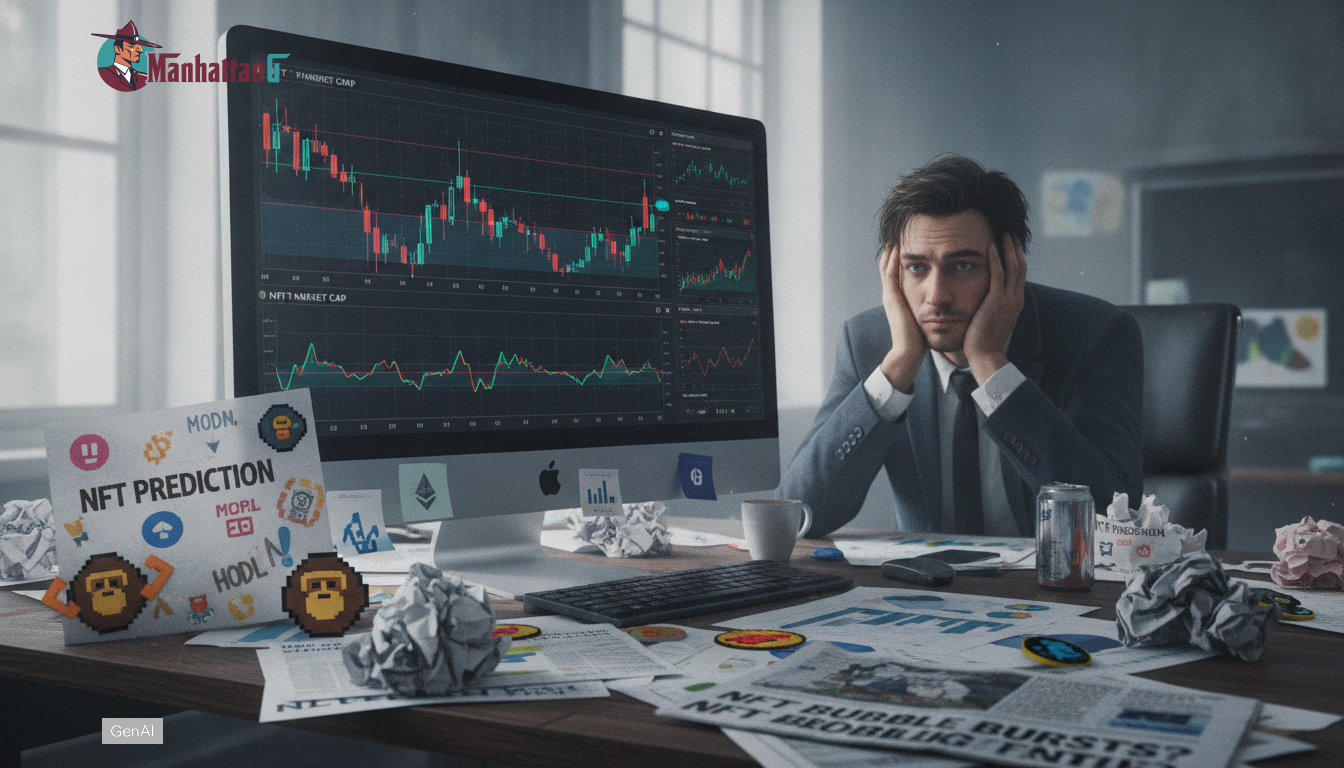
NFT market predictions peaked in 2021 and 2022, driven by celebrity drops, “blue chip” floor prices, and metaverse land sales that many viewed as inevitable. The reality turned out differently, with many forecasts mistaking social momentum for lasting demand and failing to consider liquidity conditions. Changes in trading activity and marketplace rules revealed weaknesses, causing a wave of reversals that challenged investors to reassess what is measurable, what is hype, and what can survive tighter risk conditions.
Breaking Points in NFT Forecasts
One common mistake was assuming price equals utility. Forecasts often overlooked how quickly platform policies and fees could redirect activity. According to Protos, shifts in marketplace competition and creator royalty policies, along with rising interest rates in 2022, played a significant role. The liquidity reflexivity showed that when attention drops, bids can vanish, turning chart “support” into empty space.
The Market Impact of Missed Predictions
When major predictions failed, the effects were financial and strategic. Teams scaled back or paused metaverse projects amid rising user acquisition costs. Regulatory and disclosure assumptions also shifted, directly impacting how digital assets are marketed. Headlines on enforcement and policy changes became crucial for valuation, as illustrated by coverage of tighter oversight.
Shifting Focus: What Experts Monitor Now
Analysts have grown cautious about narrow forecasts, instead prioritizing measurable catalysts after 2022’s rate hikes and recent enforcement trends. They track wallet retention, secondary market depth, and actual utility. Additionally, broader crypto flows are monitored for renewed interest, as broader liquidity can boost risk appetite while individual collections struggle for sustainable demand.
Investor Takeaways: Making Predictions Work
Investors should learn from past mistakes: approach predictions as probability distributions. Key considerations include market structure, behavior, and compliance. By conducting disciplined analysis, separating art from financial exposure, and testing liquidity, investors can transform uncertainty into manageable risks and clearer decisions.


Recent Comments