
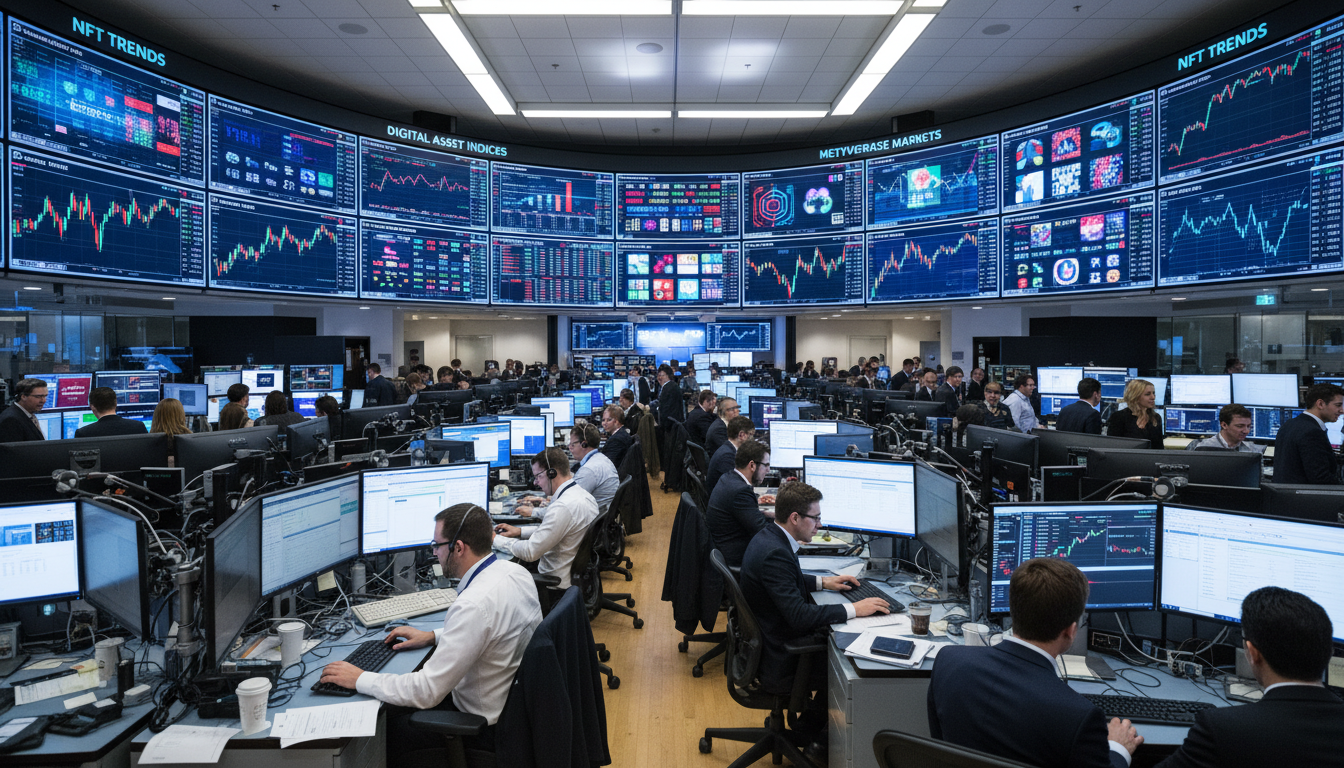
Speculation Trends in NFTs
Market desks are tracking a sharper turn toward short horizon trading as collections rotate faster between wallets. In recent comments, Magic Eden co-founder and CEO Jack Lu framed the next phase as a speculation supercycle, a tone that traders took as a cue to lean into NFT speculation without treating it as a long only bet. Today, order flow is concentrating around fewer, more liquid sets where bid depth can absorb quick flips. Live pricing on marketplace dashboards is showing tighter spreads on blue chip listings even as long tail activity stays uneven. Update notes from several platforms highlight faster listing and delisting behavior as participants manage downside risk.
Current Market Dynamics
Liquidity is being shaped as much by macro headlines as by creator drops, and traders are watching rate sensitive sentiment closely. Live macro coverage and a same day Update cadence can move floor prices quickly, particularly when traders use NFTs as high beta digital assets; for context on how monetary policy can filter into NFT floors, see FOMC Today and NFT floor price implications. Today, the NFT market is also reacting to shifts in trading volume, where wash trade concerns and fee changes can alter what looks like momentum. Any venue announcing new incentives tends to pull activity for a short window before volumes normalize.
Key Players and Platforms
Marketplace competition is tightening as platforms chase pro trader tools, better routing, and cross chain liquidity. Magic Eden has argued its product roadmap is built for higher frequency participation, and that positioning aligns with the current mood among active wallets; an earlier Update on market strain helps explain why some participants are cautious, as detailed in OpenSea delays SEA token launch amid market strain. Today, platform level policy choices are drawing scrutiny, particularly around tokens and listings that may trigger compliance questions. Separately, a broader news cycle about mainstream deal making is reminding traders how quickly narratives can spill over, including GameStop $55.5bn eBay offer, what changes next. Live attention to these signals can be as important as on chain data.
Potential Opportunities
Opportunities are increasingly tactical, tied to liquidity windows, fee shifts, and cross marketplace price gaps rather than long research cycles. Today, some desks are focusing on collections with transparent supply, frequent but not chaotic trading, and catalysts like metaverse integrations or licensing announcements that are documented by the teams themselves, with Jack Lu’s remarks still circulating across trader chats. Live monitoring of listing clusters can help identify when a floor is being defended versus when it is drifting on thin bids. Update rhythms matter because marketplace UI changes and royalty settings can alter net returns overnight. Participants also look for clean provenance and minimal fragmentation across chains, since bridging or wrapper risk can erase the advantage of catching a short term dislocation.
Risks and Challenges Ahead
Regulatory uncertainty and platform risk remain the main constraints, especially when traders treat NFTs as financial instruments rather than collectibles. The U.S. Securities and Exchange Commission has discussed how certain digital assets intersect with existing law, and readers can review context in SEC Chair on NFTs, Collectibles, and US law. Today, market structure issues also include spoofing, thin liquidity, and sharp slippage that can turn a planned exit into a loss. Live tracking may reduce reaction time, but it cannot eliminate execution risk when bids vanish. Update driven hype cycles can amplify volatility and create crowded positioning, so risk controls need to assume gaps, not smooth price paths, during fast selloffs.



Recent Comments