
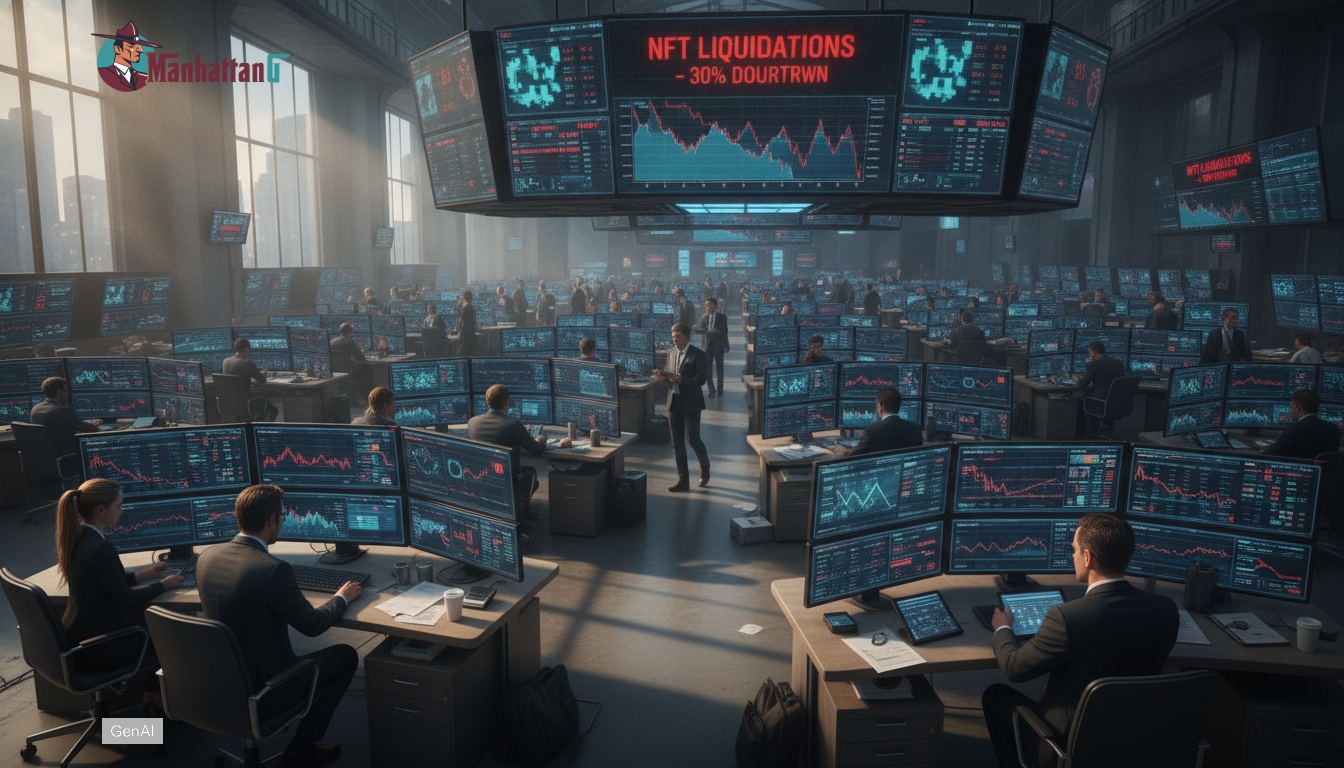
NFT Market Dynamics After Liquidations
According to available reports, crypto short liquidations can cause rapid changes across derivatives venues, leading to swift shifts in NFT market trends. Traders often notice that liquidity can thin during high volatility but stabilizes once conditions normalize. This sequence matters because it alters leverage tolerance and buyer expectations. Observers are watching to see if bids bounce back quickly or drift lower over time.
Impact on NFT Liquidity
Following forced sales, the market seems to transition from panic to selective price discovery as typical during stress events. Key liquidity indicators include bid depth, time-to-sale, and buyer patterns. In moments when macro headlines dominate, exposure limits can tighten, affecting collectibles. For instance, political volatility like the Tory reshuffle can influence sentiment. Blue-chip collections usually hold their value better than mid-tier projects in such environments.
Institutional Signals and Compliance
With liquidations addressed, balance sheet capital reportedly becomes more involved, interested in staged entries. According to reports, institutional investments in tokenized assets are progressing alongside custody and compliance workflows. This trend might influence NFTs by demanding verified practices. Consider the Franklin Templeton and HashKey initiative, illustrating large-scale operation of token rails and its potential impact on compliance-sensitive channels.
Price, Volume, and Valuation Trends
Valuations are more responsive to liquidity than aesthetics post-liquidations when traders need cash. Monitoring sales-to-listing ratios, unique buyer counts, and royalty capture consistency helps. According to the NFT Market Trends framework, established collections can better maintain floors, unlike those facing liquidity gaps. Understanding whether volumes rebound on stable pricing or only spike on declines is vital.
Trader Playbook for 30 to 90 Days
Post-liquidation strategy focuses on adapting to market changes. Investors are now prioritizing verifiable holder distribution and organic demand, as analytics suggest. Effective risk management sees NFTs as part of a broader crypto portfolio since correlation spikes may occur during stress. For related policy impacts, the SEC Crypto Path vs. Congress article is informative. A structured approach favors regular rebalancing over reacting to intra-day market volatility.


Recent Comments