
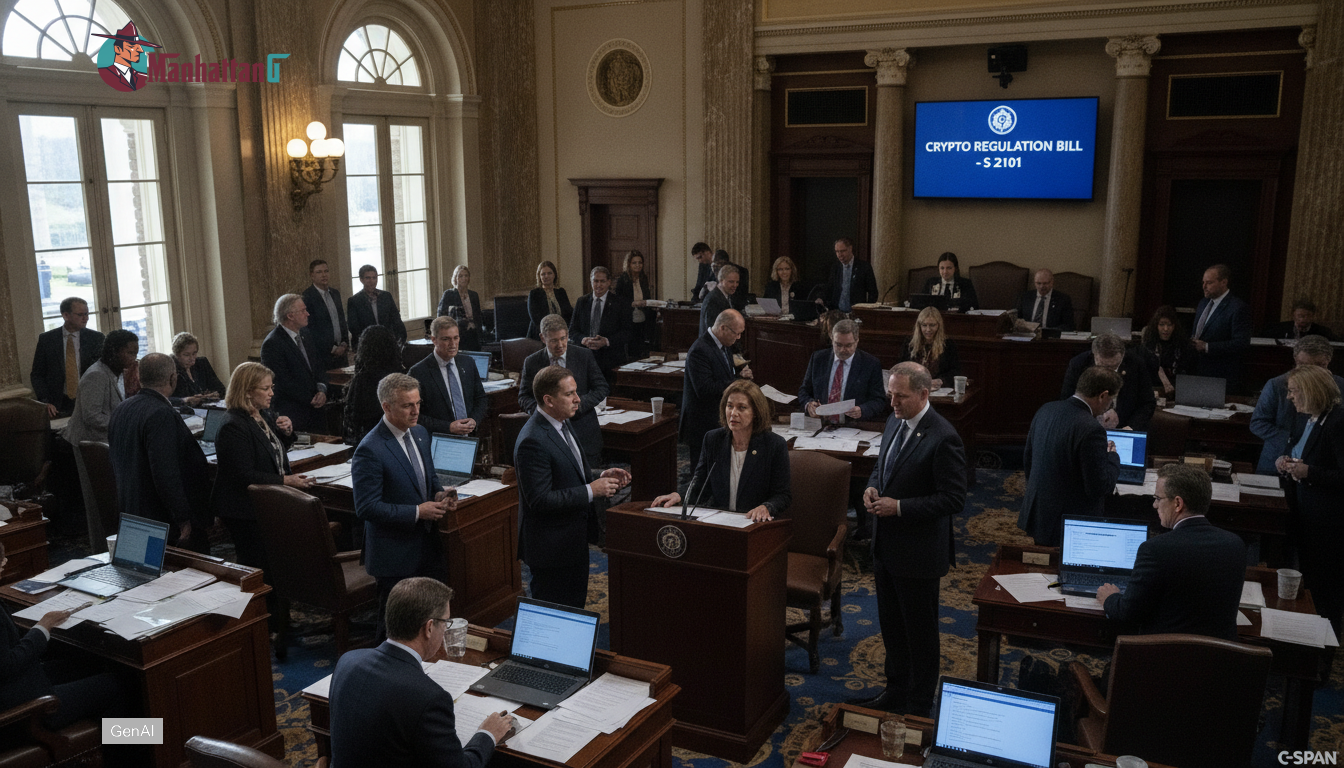
NFT regulation: what the CLARITY Act could change
NFT regulation is on the line as senators consider if the CLARITY Act can set a unified federal strategy for classifying, trading, and supervising NFTs and crypto tokens across the United States. According to available reports, the immediate challenge is procedural. Supporters have about 24 days to rally the needed votes, aiming for the 60-vote threshold often needed to close Senate debates. For readers, key queries arise: when might NFT marketplaces be treated like regulated intermediaries, what disclosures could be required, and who will be the regulatory authority? Answers hinge on the bill’s definitions and treatment of platforms listing NFTs alongside fungible tokens.
How NFTs could be classified under federal rules
The core issue in NFT regulation is classification, because it influences whether an NFT or related token activity is overseen more like a securities product or more like a commodities product. Draft discussions around the CLARITY Act are described by proponents as an effort to draw clearer boundaries between U.S. Securities and Exchange Commission oversight and Commodity Futures Trading Commission oversight, a split that has shaped enforcement actions and market uncertainty. For NFT marketplaces, the downstream test is whether platform activity could trigger registration-type obligations tied to brokerage, exchange functions, or alternative trading systems, depending on how definitions and exemptions are ultimately written. If classification language is narrow, many collectibles could remain outside heavier financial-market rules; if broad, more platforms could face standardized compliance expectations rather than relying on case-by-case legal opinions.
Marketplace compliance: custody, disclosures, and manipulation
If the statute pushes more venues into a federal registration pathway, compliance costs could shift toward recurring obligations such as written risk disclosures, conflicts policies, and surveillance designed to deter wash trading and other manipulations. Market volatility has been part of the policy backdrop: Binance Sees $3.3B Monthly Outflows as ETH Withdrawals Hit 3-Year High has been cited by industry watchers as a reminder that custody and liquidity stress can surface quickly. Custody and segregation standards could also become more explicit if lawmakers write market-integrity rules directly into statute rather than leaving more to enforcement discretion, and for additional context on creator royalties and primary sale mechanics, see NFT Art: Definition, Minting, Selling, Royalties. A related view of how lawmakers pair definitions with enforcement powers appears in UK bans support for IRGC: new offences and powers.
Timeline and Senate vote math for NFT-related provisions
Even if the policy case is strong, the Senate process sets the near-term timetable for crypto legislation that touches NFTs. Backers have framed a 24-day push to consolidate support, though the available time can shift with the Senate calendar and leadership decisions. The practical hurdle is frequently described as the 60-vote cloture requirement used for many contentious measures, which can raise the bar for passage. That dynamic empowers a small group of swing senators to request changes in exchange for support, including revisions to how digital assets are defined and how agency jurisdiction is allocated. Committee drafting, floor time, and amendment votes can all alter the final scope, so market participants often watch for concrete milestones such as committee markups and updated bill text. Delays can leave platforms operating under existing enforcement-driven uncertainty while they plan compliance roadmaps.
What to watch next: amendments, agencies, and real-world dates
The biggest swing factors are amendments that widen or narrow definitions and agency turf decisions that allocate responsibilities between the SEC and CFTC, as reflected in any published bill text. Readers tracking creator economics should watch whether marketplace rules focus on anti-fraud and disclosure standards that could change how listings, promotions, and royalty messaging are handled, and another practical signal is how adjacent crypto activity is treated, because NFT venues often share infrastructure with stablecoin and derivatives onramps; for market context, see Stablecoin Transaction Volume Jumps in June as Reserves Dip and XRP futures slide as XRPL courts institutions. Preemption debates also matter because state-level rules could still apply if the statute does not clearly set federal boundaries. Until final text is published and effective dates are set, compliance planning remains provisional.



Recent Comments