
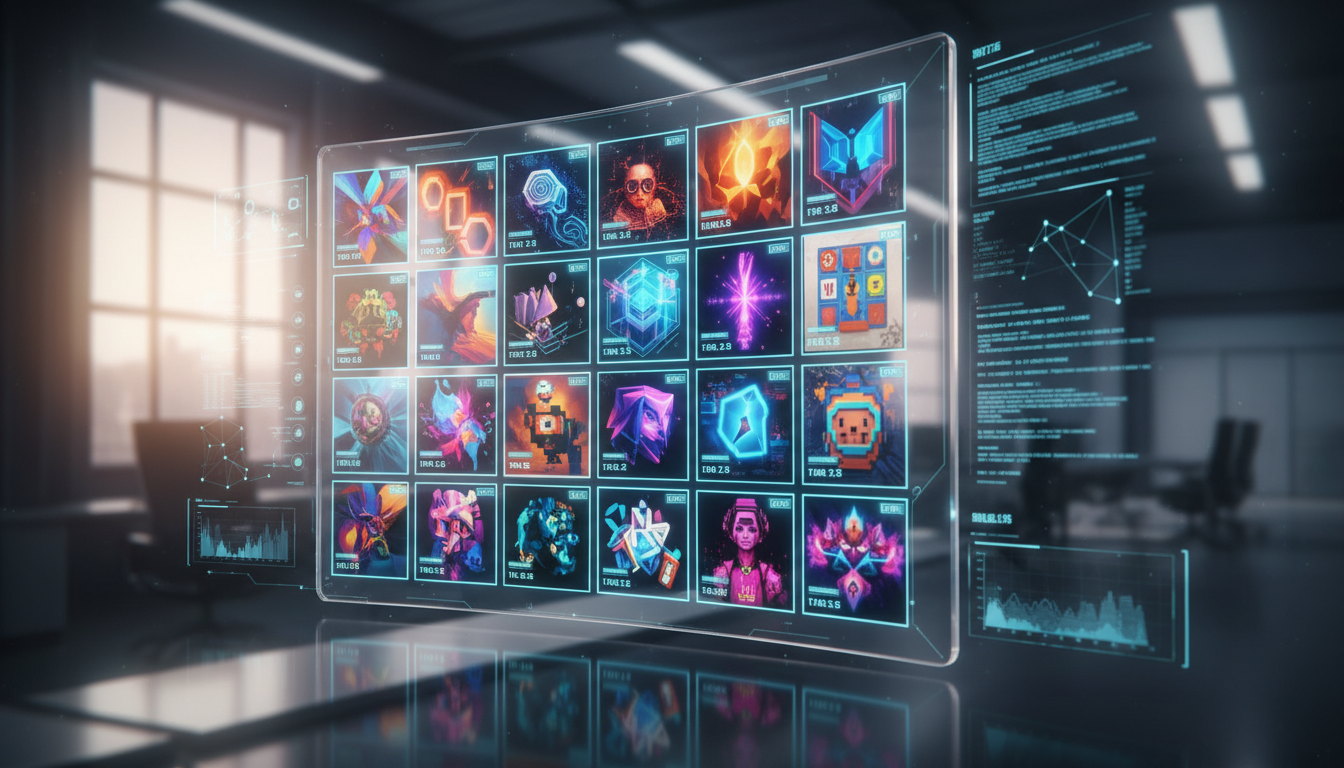
Understand the Basics of NFTs
NFT coverage today is less about slogans and more about how ownership is proven and traded under real market pressure. The core mechanism is still a token on a public blockchain that points to an asset and its history, while marketplaces and wallets handle access control and transfers. In active platform rollouts, AI Integration is increasingly treated as an interface layer that helps users search, verify, and manage collections faster. For readers tracking digital marketing campaigns, the practical distinction is whether the token grants utility, licensing, or simply a collectible claim. Live product changes also matter because metadata hosting and marketplace rules can alter how the same NFT behaves across venues. An Update in wallet tooling can change custody expectations overnight.
Current Market Trends in NFTs
Market action today is being shaped by liquidity returning to a handful of recognizable collections while long tail assets struggle to clear at prior prices. In its recent market coverage, the new york times has framed NFTs as a test case for digital ownership norms rather than a pure art wave, and that lens is showing up in how brands structure drops and disclosures. For price watchers, one Live driver is macro policy, and NFT Evening analysis of the Fed decision and NFT floors is a timely reference point that ties near term risk appetite to floor price behavior, as traders explicitly react to rate headlines in the same hours they react to crypto volatility. Another Update is that narrative premium is shifting toward utility and access rather than profile pictures alone.
Integration with AI and Technology
Creators and marketplaces today are shipping tools that compress the work of discovery, authenticity checks, and rights review into a few clicks, and those shifts are arriving as continuous Live deployments rather than annual product cycles. In newsroom style tracking, youtube updates around content ID and synthetic media are relevant because NFT projects now distribute trailers, music stems, and creator assets across video platforms with tighter provenance expectations. Within that workflow, AI Integration is being used to flag copied artwork, cluster related collections, and generate safer listing descriptions that reduce policy violations, and a useful parallel for consumer expectations appears in AI fitness instructors push unreal gains to users, which highlights how AI mediated guidance can blur trust boundaries when incentives are misaligned. An Update in model transparency standards can quickly become a listing requirement for major venues.
Real-World Applications of NFTs
Real world NFT activity today is concentrated in ticketing, loyalty, gaming inventory, and tokenized claims that are designed to survive platform migrations. The most operationally difficult work is not minting, it is keeping identity, payments, and customer support aligned across apps and devices. A Live example is how wallet UX is moving into mainstream mobile flows, and Hoskinson: Wallets Move Into iPhones, Androids describes a direction of travel toward embedded wallets that reduce friction for non crypto users. For enterprise pilots, compliance teams are also tightening how custody and transfer rights are explained, because digital ownership claims can trigger consumer protection scrutiny. AI Integration is showing up here as fraud detection on secondary markets, where behavior patterns are scored to reduce chargebacks and impersonation. Another Update is the rise of token gated customer service that verifies entitlements without exposing private data.
Future Prospects for NFTs
Near term prospects today depend on whether platforms standardize metadata reliability and whether regulators clarify what constitutes a security, a collectible, or a consumer product. The policy angle is becoming a Live constraint on launch timelines, and the internal briefing in NFT Regulation Could Reshape Digital Assets Market underscores how disclosure and marketplace responsibilities may be redistributed rather than eliminated. On the infrastructure side, creators are already hedging platform risk by choosing storage and licensing terms that can be enforced outside a single marketplace. AI Integration will likely matter most in compliance operations, where automated monitoring can detect wash trading, counterfeit media, and misleading claims at scale. An Update in audit tooling could make provenance checks routine for buyers the way antivirus scans became routine for downloads. The next wave will reward projects that can prove utility, rights, and continuity under stress.



Recent Comments