
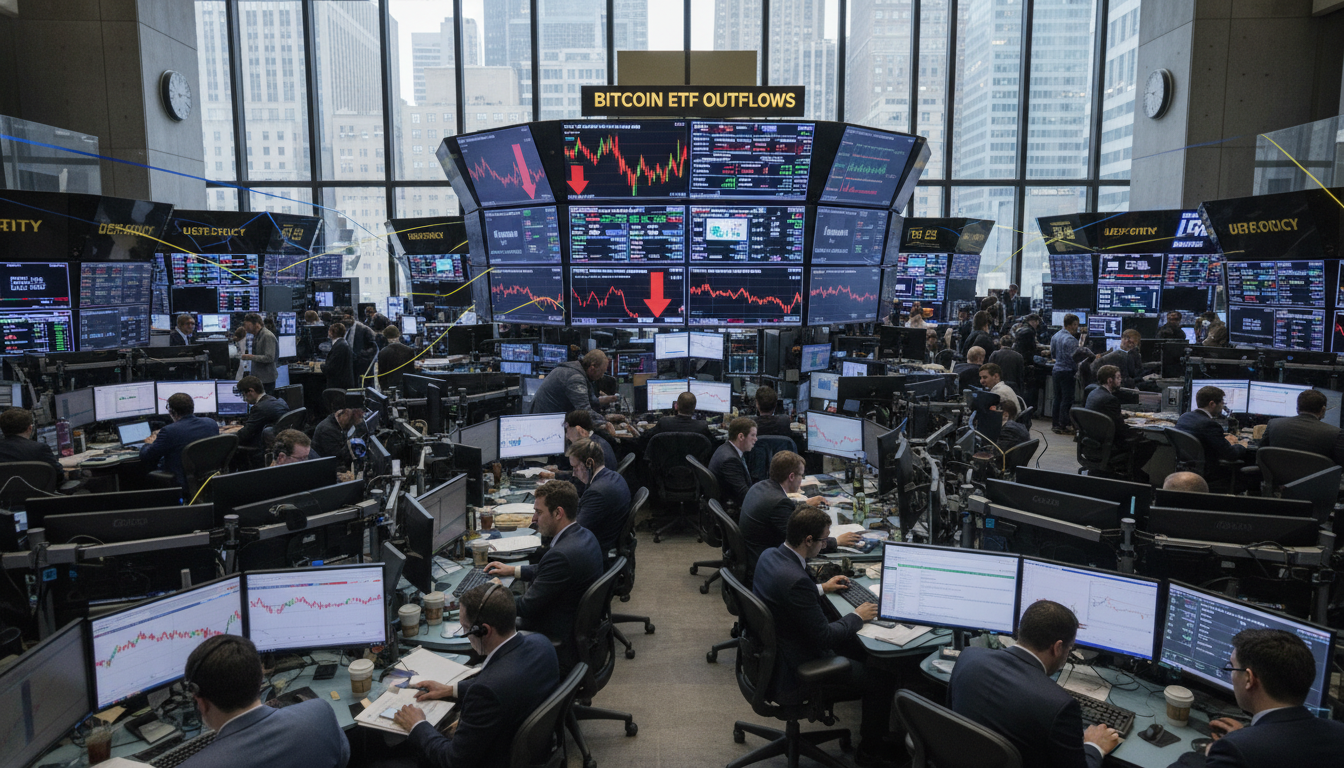
Bitcoin ETF Outflows: An Overview
Risk appetite in crypto markets tightened Today as U.S. spot Bitcoin funds posted another session of net redemptions, keeping trading desks focused on flow-driven price action. In midday notes, Bloomberg highlighted that the recent pattern of Bitcoin ETF outflows has made positioning look increasingly one sided across large allocators who entered through ETFs. Several brokers described the move as de risking rather than a wholesale exit, citing client rebalancing and reduced leverage in high beta sleeves. Live order books showed thinner bids on larger venues, and an Update from some ETF market makers pointed to wider spreads during U.S. hours. The immediate effect has been faster swings around macro headlines and funding conditions.
Rising Treasury Yields and Their Effects
Bond markets have been the dominant cross asset driver, with Treasury yields pushing higher and raising the hurdle rate for nonyielding assets. The U.S. Treasury publishes benchmark yields daily, and traders monitored the curve closely Today as front end pricing adjusted to new rate expectations. In a related Live briefing on broader risk, UK food costs policy pressure was watched as a parallel inflation signal that can feed global rates sentiment. Reuters coverage of rate markets has repeatedly tied stronger yields to tighter financial conditions, and an Update from several macro desks framed the move as a liquidity test for crypto. Higher real yields can compress valuations and encourage rotation into cash like instruments.
Impact on Bitcoin’s Price Dynamics
Price action in BTC has increasingly reflected short horizon hedging instead of directional conviction, with derivatives traders leaning on options to manage sudden downdrafts. CME publishes daily Bitcoin futures volume and open interest, and market participants cited those figures Today to argue that leverage is being recycled rather than added. The link between flows and tape is clear when Bitcoin ETF outflows coincide with heavier sell programs during U.S. equity hours, a pattern noted by Bloomberg in flow commentary; for context on how traditional venues are adapting, Wall Street nonstop crypto trading hours captures the push toward more continuous execution. Live volatility gauges ticked up, and one Update from exchange analytics teams described faster liquidation cascades when bids retreat.
Institutional Responses to ETF Outflows
Institutions are responding with more nuanced trade construction, pairing spot exposure with rate hedges and shorter duration risk budgets. BlackRock and Fidelity publish fund documents that describe creation and redemption mechanics, and advisors referenced those materials Today to explain why ETF flows can move quickly without signaling long term capitulation. Some desks also cited re allocation into adjacent digital assets and NFTs, using research to keep clients engaged while reducing single asset concentration; a recent market piece, CLARITY Act vote and NFT safe harbor, illustrates how policy risk can shift portfolio tilts. Live execution chatter emphasized patience, using limit orders and time weighted schedules. Another Update from prime brokers noted higher margin sensitivity as rates remain elevated.
What This Means for Future Investments
Forward looking allocation decisions are now being set by the interaction of flow persistence, macro rates, and liquidity conditions rather than narrative catalysts alone. Investment committees watching Wall Street positioning want confirmation that selling pressure is exhausting before increasing exposure, and they are tracking whether redemptions stabilize over multiple sessions. Strategists at Bloomberg have emphasized that crowded trades can unwind in stages, so risk controls matter as much as entry points. Today, some advisors favored staggered re entry plans and tighter drawdown limits, while keeping dry powder for dislocations. Live monitoring of ETF baskets and futures basis is becoming standard in weekly reviews. An Update from several CIO notes stressed that improved transparency in flow data helps, but discipline still determines outcomes in New York trading.



Recent Comments