
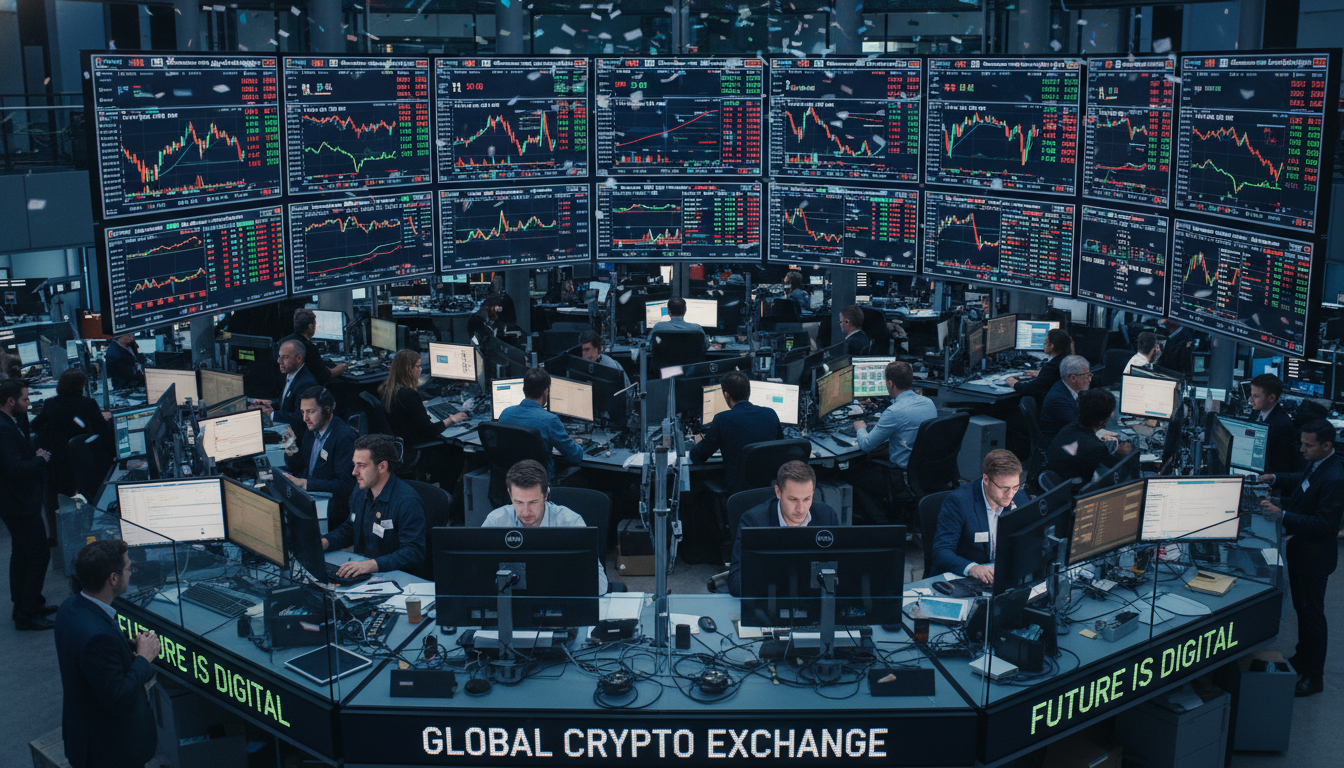
CME Group’s 24/7 Trading Implementation
CME Group is pushing ahead with expanded crypto market access as rivals compete for order flow beyond the traditional session. Traders on major desks describe the change as an operational shift that forces coverage, margin, and risk controls to run around the clock. Today, desks are aligning staffing and automation so price discovery does not stall when U.S. cash markets close. In this context, 24/7 cryptocurrency trading is becoming a benchmark feature for institutional venues that want to keep futures and options tied to constant spot moves. The decision pressures clearing, surveillance, and collateral workflows to match continuous conditions. Live monitoring is replacing end of day checks as risk managers watch positions through weekends. The next Update from product teams is expected to focus on how extended hours affect client onboarding.
Impact on Cryptocurrency Markets
Crypto market makers say the immediate effect is tighter linkage between offshore spot and regulated derivatives, especially when volatility spikes outside New York hours. CME has not published a single unified metric for the shift, but executives have repeatedly framed extended access as meeting global demand for hedging, and that message is now reshaping dealer behavior. For a snapshot of recent sentiment and positioning, Bitcoin price move above $80k analysis highlights how traders split on momentum versus mean reversion. Today, liquidity providers are reallocating inventory to cover more time zones, which can reduce abrupt gaps at the reopen. A parallel Live conversation is unfolding around retail flow, because constant access can amplify reaction speed to macro headlines. An Update on funding and basis is also being tracked by desks that hedge options exposures.
Hyperliquid’s Role and Influence
Hyperliquid has become a reference point in the current fight over who sets standards for nonstop markets, because it offers continuous trading mechanics that feel native to crypto rather than adapted from legacy exchanges. Market structure lawyers note that the dispute is not only about volume, it is about which rules define execution quality, liquidation timing, and surveillance in a perpetual environment. In the middle of that debate, 24/7 cryptocurrency trading is used as a shorthand for platform credibility even when technical and legal designs differ sharply. For a separate example of how fast adjacent digital markets can shift, Smart glasses boom grows despite rising privacy fears shows how adoption pressures governance. Today, the wall street vision of a unified marketplace is colliding with crypto first venues that iterate faster. Live order book transparency remains a talking point as policymakers ask for clearer audit trails. The next Update is likely to center on how liquidation engines behave during thin weekend liquidity.
Challenges and Opportunities
The hardest problems are less about matching engines and more about governance, capital, and accountability when everything stays open. Compliance teams involved in trading on wall street say continuous sessions complicate surveillance because alerts must be triaged without relying on a daily reset. In the middle of those preparations, Lightweight Blockchain Boosts Smart NFT Security is being cited internally as a reminder that infrastructure choices can change incident response times across digital assets. Today, firms are updating margin playbooks and kill switch policies to handle sudden weekend moves, while clearing members push for predictable intraday margin processes. Live incident drills are becoming routine so operations teams can handle connectivity and pricing errors without pausing trading. A practical Update many desks expect is clearer guidance on when exchanges can trigger price limits or trading halts in extreme conditions.
Future of 24/7 Trading Platforms
What comes next will be determined by whether institutions accept crypto style continuity while insisting on the protections they expect from Wall Street trading. Exchange executives describe a convergence where regulated venues extend hours and crypto native platforms adopt more formal controls, but the timelines depend on regulators and client risk appetite. In that convergence, 24/7 cryptocurrency trading is no longer a novelty, it is a competitive requirement that shapes fees, liquidity programs, and technology spend. Today, trading floor wall street routines are being rewritten as global desks coordinate handoffs across regions instead of closing books at a fixed hour. Live data distribution and consistent reference pricing will decide which platforms become benchmarks for derivatives and structured products. The next Update to watch is how venues standardize reporting and surveillance so continuous access does not weaken market integrity.

Recent Comments