
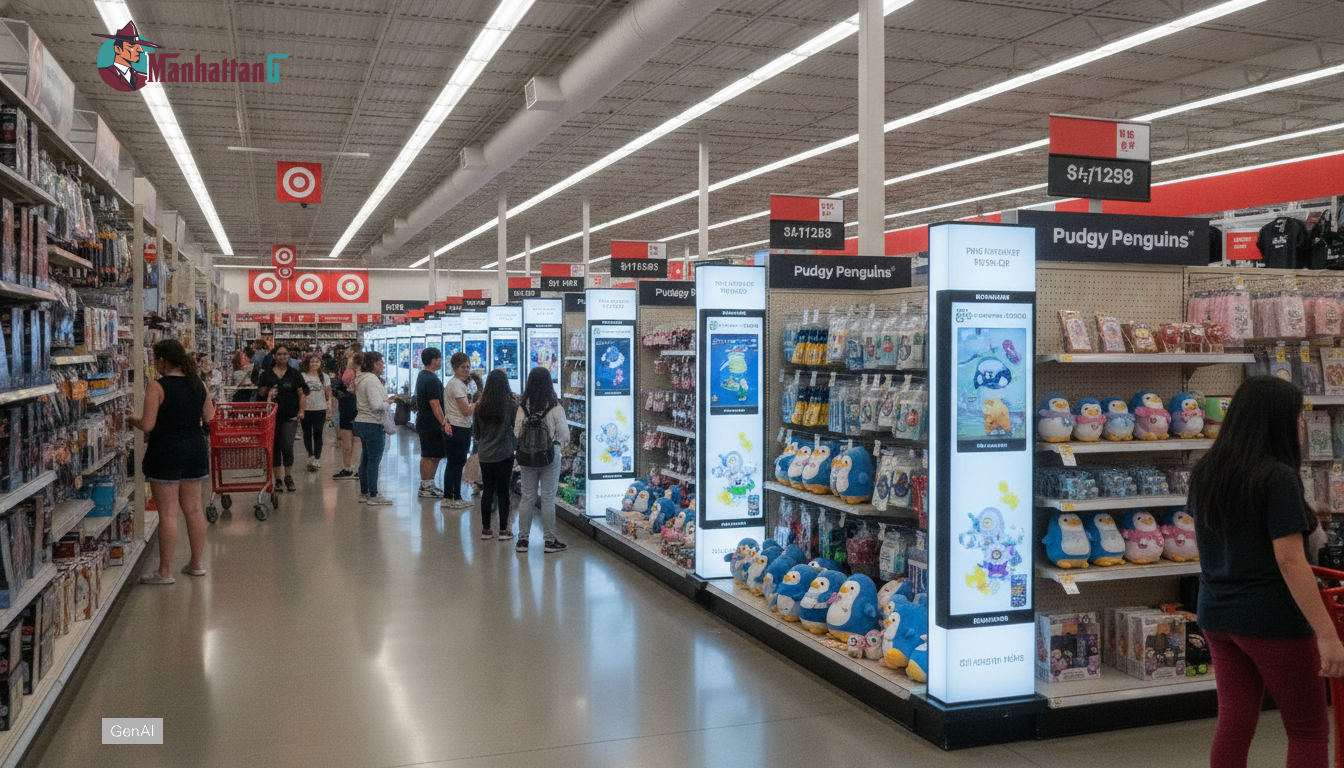
NFT retail expansion: Pudgy Penguins enters Target
According to available reports, Pudgy Penguins may be aiming to widen its consumer reach by moving from digital collectibles into physical shelves through what has been described as a Target trading card push. The project appears to be positioning the brand as a character-driven franchise rather than a crypto-only asset, with packaging, distribution, and licensing designed for casual shoppers. In that shift, NFT retail expansion becomes less about floor prices and more about sell-through, potential reorder cycles, and merchandising discipline. The move might signal a preference for steadier unit economics over hype cycles, since retail partners typically expect consistent supply and clear customer support. If executed well, this kind of NFT retail expansion frames the brand as something people can buy, gift, and collect without first learning blockchain jargon.
How the Target trading card rollout works
The trading card program is framed around familiar retail behaviors, including impulse buys, gift purchases, and collecting for set completion. For context on how mainstream platforms manage access and distribution at scale, the wider debate on youth access has parallels in how brands manage reach, as discussed in Social Media Ban Looms: Under-16s in the Spotlight, and retail placement matters because it puts the product in front of shoppers who may never browse a marketplace, and it can force clearer labeling and redemption steps at shelf level. The SKU strategy is intended to make the trading cards feel like a standard aisle purchase, with product language aimed at mainstream retail shoppers.
Why NFT retail expansion changes the buyer funnel
Physical merchandise may change who engages with Pudgy Penguins, since shoppers may discover the characters without ever visiting a marketplace. That matters for brand building because retail discovery often produces different cohorts than crypto-native communities, including parents buying gifts and collectors comparing sets. Readers tracking how financial institutions evaluate crypto-adjacent products can compare the shift in narrative and distribution in Institutional NFTs and ETF rails, as the goal is to turn recognition into repeat purchases, with character art and product quality doing the persuasive work at shelf level. In operational terms, this form of retail-led growth also requires consistent rights management, customer service scripts, and a clear path for consumers who want digital benefits without complex wallet setups.
Market impact and trust signals to watch
A credible retail partner can influence how investors interpret demand, because units sold and replenishment orders are measurable indicators that do not rely on on-chain trading volume alone. The immediate effect is often reputational: mainstream retail placement can lower perceived friction for newcomers and reduce the stigma that NFTs are only speculative instruments. Recent security headlines have also raised buyer expectations for clear rules and support; for example, one report titled Humanity Protocol’s H Token Crashes Over 80% After $36M Private-Key Breach alleges a sharp price drop and a $36M incident, and analysts also track cross-category competition for attention, as in Grayscale Highlights Five DeFi Projects With Cash-Flow Value. At the same time, the market is sensitive to how brands handle redemption mechanics, data privacy, and secondary market expectations.
What comes next for NFT retail expansion
The most durable outcome of this rollout could be a template that other projects might copy, with standardized packaging disclosures, redemption steps, and post-purchase support that can satisfy big-box compliance. The broader lesson is that mainstream retail tends to prefer predictable supply and a low-returns profile, which can pressure NFT brands to professionalize operations as they pursue NFT retail expansion, and for market context on demand cycles, see NFT market cap jumps in July as CryptoPunks lift NFTs. If the program performs as intended, it could strengthen the case for more licensed products, seasonal assortments, and cross-promotions that resemble standard entertainment merchandising. For Pudgy Penguins, the next phase likely depends on whether the franchise can sustain character relevance beyond crypto cycles and whether retail buyers see consistent sell-through. Done well, retail distribution can convert digital communities into repeat buyers and can create new fans who never touched a wallet.

Recent Comments